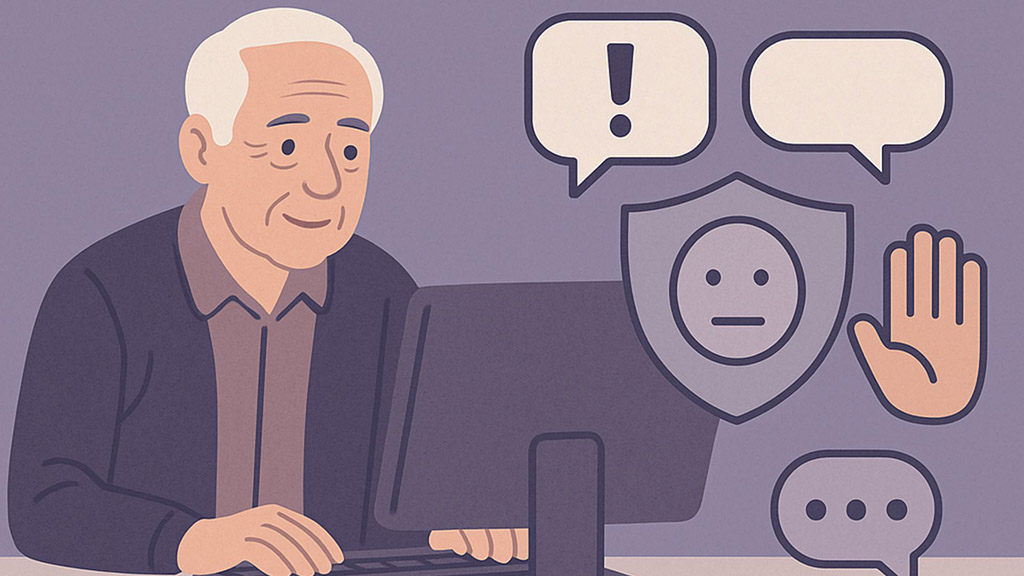
Introduction
On social media, we often encounter different opinions, emotions, and arguments. Your posts and stories may also attract criticism or even aggression.
This lesson will help you learn how to respond calmly to negative comments, understand what can and cannot be published, check information without violating the rights of others, and protect yourself and others from unpleasant situations online.
Taking care of your nerves is also an important part of media literacy!
How to Respond to Negative Comments and Posts
We can all encounter unpleasant comments or posts on the internet.
Sometimes they make us feel angry, hurt, or tempted to respond immediately. But the best way to protect your nerves is to stay calm and respond thoughtfully.
By learning to control your emotions and reply with consideration, you not only keep your peace of mind but also demonstrate your culture and self-confidence.
Here are some simple tips to help you act calmly and wisely:
- Don’t rush to reply – take a break and calm down first.
- Avoid engaging in arguments if you see that the person just wants to provoke you.
- If a comment is offensive, report it to the administrators or block the user.
- Write carefully: words online also have consequences.
- Remember: when you respond politely, you show your confidence and self-respect.
We also recommend reviewing the presentation that explains in more detail how to respond to negative comments and publications online:
Staying Calm Online: Responding to Negativity with Grace, копия
How to Check Information and Avoid Copyright Infringement
Today, everyone can be a “small media outlet” – sharing news, photos, and opinions.
But along with this opportunity comes responsibility. Before publishing or reposting anything, you should make sure that the information is true and does not violate anyone’s rights.
Sharing fake news or using someone else’s materials without crediting the author can have both legal and moral consequences.
This section will help you recognise unreliable sources, avoid mistakes, and always remain ethical in your online publications.
Remember the three golden rules:
- Check the source. Who published this news first? Is it a reliable media outlet or an unknown page?
- Confirm the facts. Look for the same information in several sources. If the news appears only in one place, it’s suspicious.
- Respect authorship. If you use someone else’s photo, text, or quote, always credit the source.
Tip: Use free photo banks with open licences – for example, Pixabay, Pexels, or Unsplash.
Summary
Now you know how to stay calm on social media, verify information, and respect copyright.
If everyone treats the internet with respect and responsibility, social networks will become a safer and more pleasant space for sharing your stories!
And now, check your knowledge
