
This lesson introduces the course’s learning approach and explains how participants will engage with Flipped Learning 3.0.

The Individual Learning Space
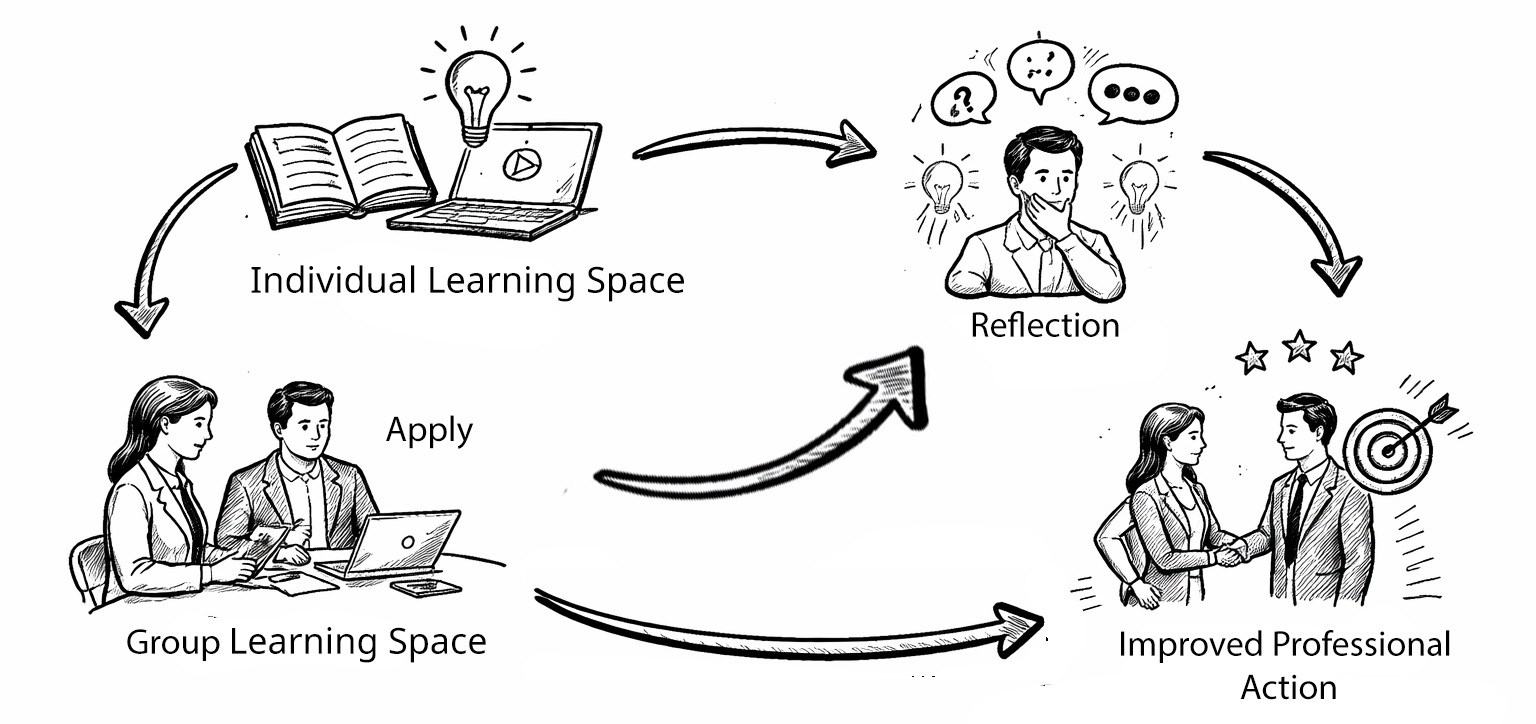
The individual learning space is the starting point of the learning process. In this phase, participants work independently using the online learning platform. They engage with learning materials such as short interactive videos, texts, and other interactive elements. The focus is on active learning, not passive consumption. Participants are encouraged to reflect, take notes, and connect new knowledge with their own experience. Self-assessment questions support understanding, and help participants check their progress. Completing the individual learning space is essential, as it prepares participants for meaningful participation in the group learning space.
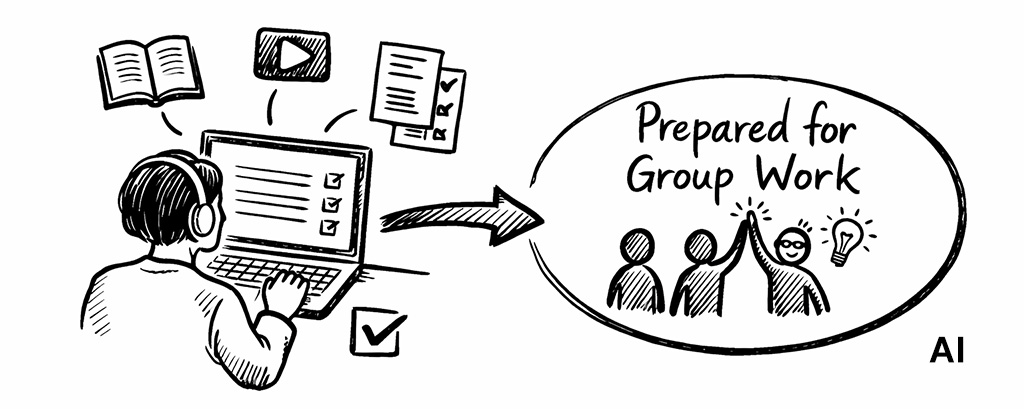
From Individual Learning to Group Readiness: Learners engage with digital materials in the individual learning space through active preparation and self-assessment. This preparation enables meaningful participation and collaboration in the group learning space.
The Group Learning Space
The group learning space builds directly on the individual preparation. This phase focuses on collaborative and active learning. Participants work together to apply knowledge, solve problems, and discuss ideas. Activities may include group discussions, case studies, peer feedback, and practical tasks. The educator’s role shifts from lecturer to facilitator, guiding and supporting the learning process. The group space enables more profound understanding through interaction, reflection, and shared experience.

Collaborative Learning in the Group Learning Space. Adult learners engage in discussion, exchange ideas, and co-create knowledge through active collaboration.
Clear Expectations for Participation
Participants are expected to take an active role in their learning. Preparation in the individual learning space is required before joining the group activities. Active participation in discussions and tasks is essential. Reflection on learning experiences is encouraged throughout the course. Collaboration and respectful exchange with others are key elements of the learning process.
Practical Relevance and Application
The course is designed to support real-life professional practice. Participants will work on tasks that are directly connected to their professional context. They are encouraged to transfer new knowledge and skills into their daily work. Learning outcomes are practical, applicable, and focused on real challenges. This ensures that learning is meaningful, relevant, and sustainable.
Here is the opportunity for your self-evaluation of the items presented in this reading text: