
In Flipped Learning 3.0, the instructor (teacher) is not the only person in charge. Instead, the student becomes an active partner. This approach works well because adults are more motivated when they take ownership of their own progress.
1. Choice vs. Agency
It is important to know the difference between these two ideas:
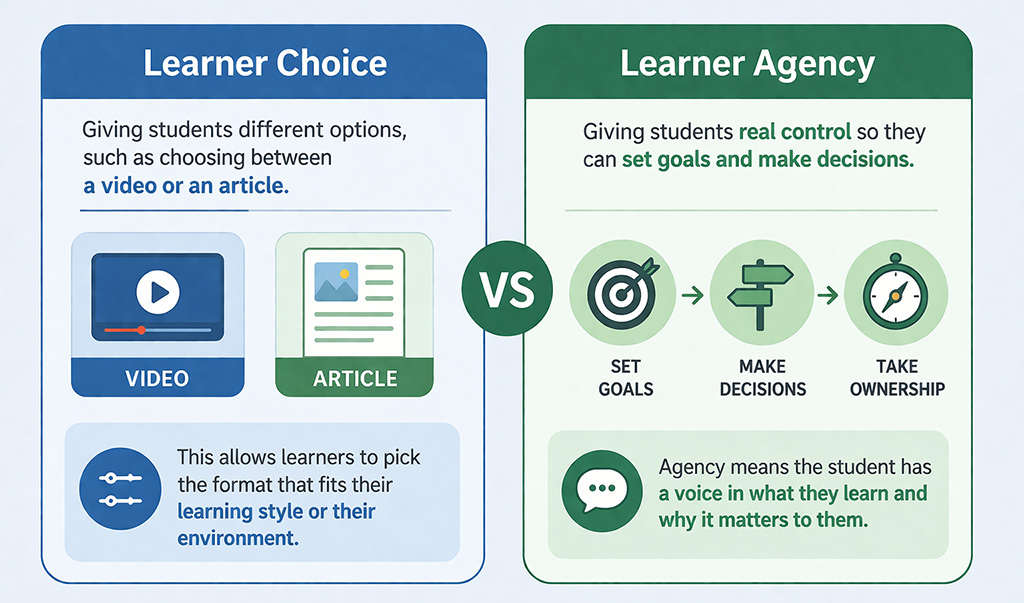
- Learner Choice
Giving students different options, such as choosing between a video or an article.This allows learners to pick the format that fits their learning style or their environment.
- Learner Agency
Giving students real control so they can set goals and make decisions.
Agency means the student has a voice in what they learn and why it matters to them.
2. Before Class (Individual Learning)
You can give students power before the lesson even starts:
- A Menu of Resources
Offer the same information in different ways, such as a video, a podcast, or a text.This helps with inclusion because some students might find it easier to listen than to read.
- Setting Goals
Ask learners what they already know and what they want to learn. You may run a survey before the training starts. Be aware that normally the learning platform is ready – this enables the conveying of the “standard knowledge”. You may instruct your learners that they do not have to go through all the content if they find out that in certain cases they have the necessary knowledge and understanding.Doing this helps students connect the new topic to their own life or work experience.
In any case, it is important to know before the Group Learning Space what learners already know. This enables you to select a perfect collaborative activity.
- Own Pace
Remind students they can pause or rewind videos.Students should feel confident taking their time to fully understand difficult parts.
3. During Class (Group Learning)
When everyone is together, use the time for active work:
- The “Must, Should, Could” Rule:
- Must: The basic task for everyone.
- Should: An extra task for those who finish early.
- Could: A difficult challenge for those who want to go deeper.
This structure ensures that every learner stays busy and challenged at their own level.
- Learner Roles
Let learners choose their role in a group, such as Note-taker or Timekeeper.Choosing a role allows students to contribute using their personal strengths.
- Flexible Projects
Let students show what they learned through a drawing, a speech, or a report.This is very helpful for students who are not confident with writing but have great ideas.
4. After Class (Reflection)
Learning does not stop when the lesson ends:
- Think Back
Ask learners what was useful, what is confusing, and how they will use the lesson.Reflection helps learners turn information into long-term knowledge.
- Choose the Next Step
Offer a list of follow-up activities for practice or work.A “post-class menu” lets students decide how to apply their new skills in the real world.
5. The Teacher’s New Role
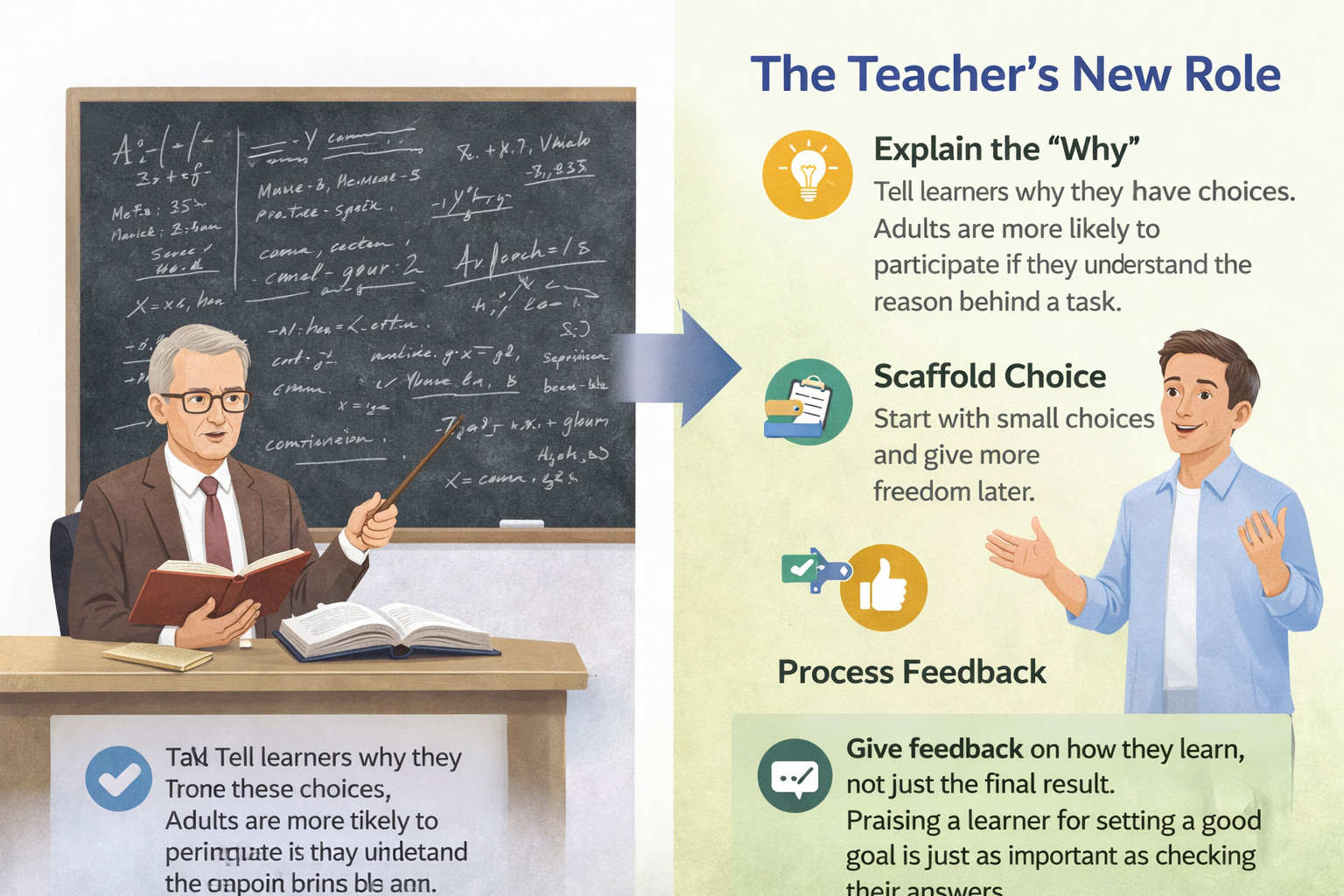
The teacher’s job is to design the choices and then support the students:
- Explain the “Why”
Tell learners why they have these choices.Adults are more likely to participate if they understand the reason behind a task.
- Scaffold Choice
Start with small choices and give more freedom later.Giving too many choices at once can be overwhelming, so it is better to build confidence slowly.
- Process Feedback
Give feedback on how they learn, not just the final result.Praising a learner for setting a good goal is just as important as checking their answers.
Key Summary
Adults learn best when they feel in control. By offering choices in how they study, work together, and reflect, we help them become lifelong learners.