
In this lesson, you learn about the Flipped Classroom (the predecessor method that led to the flipped learning framework), Flipped learning and finally the Flipped Learning 3.0 Framework.
The start – Flipped Classroom
The Flipped Classroom is an instructional approach in which the traditional sequence of teaching and learning activities is reversed. In a conventional setting, new content is typically introduced during class time, while practice and consolidation take place at home.
In a Flipped Classroom, learners first engage with new material independently before the lesson, often through videos, readings, or interactive digital resources. This allows classroom time to be used for applying knowledge, engaging in discussions, solving problems, and receiving individual support from the educator.
The focus during face-to-face sessions is therefore on active learning, collaboration, and more profound understanding rather than initial content delivery. It is important to note that the Flipped Classroom is not a pedagogical method in itself.
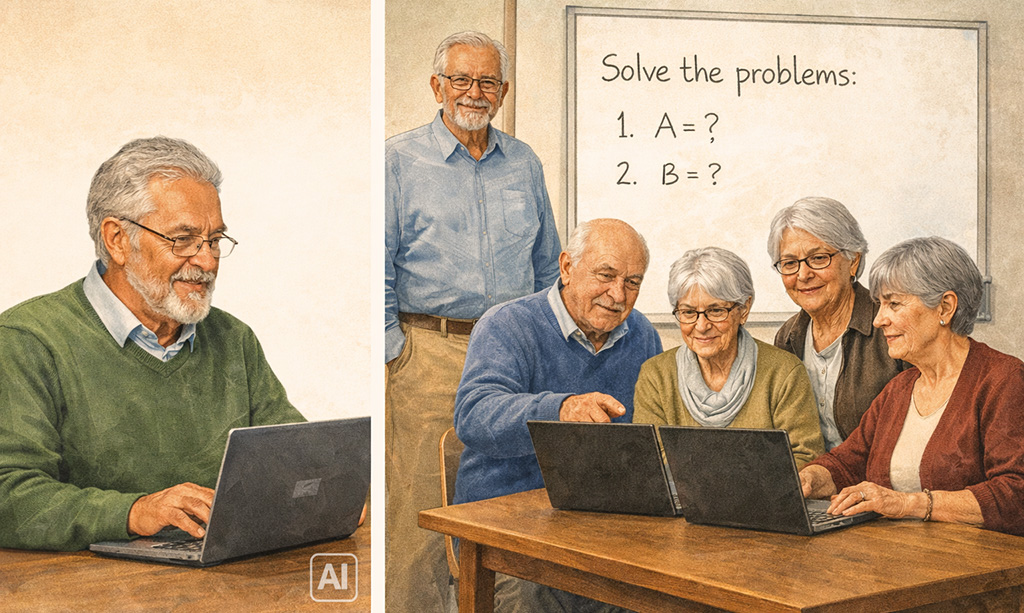
The flipped Classroom setting: Preparation at home, more time in the onsite teaching for the learners to solve problems.
Instead, it represents a specific way of organising teaching and learning processes by restructuring when and how different phases of learning take place. The actual teaching methods used within this structure, such as group work, project-based learning, or problem-based activities, can vary depending on the learning objectives, the target group, and the educational context.
FL3-M1-L2 Flipped Classroom von Peter Mazohl
Flipped Learning
Flipped Learning is a pedagogical approach that redefines how teaching and learning are organised by shifting the focus from teacher-centred instruction to active, learner-centred engagement. In this approach, direct instruction is moved from the group learning space to the individual learning space.
Learners first engage with new content independently, often through digital resources such as videos or interactive materials, allowing them to process information at their own pace. As a result, the group learning space is transformed into a dynamic and interactive environment where learners apply knowledge, collaborate with others, and engage more deeply with the subject.
The educator’s role also changes significantly. Rather than primarily delivering content, the educator becomes a facilitator who guides learning, supports individual needs, and encourages critical thinking and creative engagement.
Flipped Learning is grounded in four key pillars:
- Flexible Environments,
- Learning Culture,
- Intentional Content, and
- Professional Educators.
Flexible environments allow both physical and pedagogical adaptability, enabling learning to take place in different settings and formats. The learning culture shifts responsibility towards learners, encouraging them to take an active role in their own learning process. Intentional content ensures that learning materials are carefully selected and structured, so that foundational knowledge is acquired individually, while higher-order thinking skills are developed in the group setting. Finally, professional educators play a central role in designing meaningful learning experiences, monitoring progress, and providing targeted support.
FL3-M1-L2 Flipped learning von Peter Mazohl
Overall, Flipped Learning creates a more personalised, engaging, and effective learning experience by combining independent preparation with interactive, application-focused group work.
The Flipped Learning Framework
Flipped Learning 3.0 represents an important development in the evolution of flipped approaches to teaching and learning. The initial presentation started with a landmark conference in Istanbul in 2017, where the Elements of Effective Flipped Learning were first introduced. Since then, Flipped Learning 3.0 has moved beyond being understood as a simple pedagogical approach.
It is now recognised as a comprehensive framework that provides structured guidelines, principles, and design strategies to support educators in creating purposeful, consistent, and effective learning processes. A central feature of this framework is its organisation into 12 interconnected sectors, which together define the key areas of effective implementation.
These sectors are:
- Understanding Flipped Learning
- Communication and Culture
- Planning for Flipped Learning
- Individual Space Mastery
- Group Space Mastery
- Assessment
- K-12 Focus
- Learning Spaces
- IT Infrastructure
- Student Feedback
- Evidence and Research
- Professional Development
Each sector includes specific elements that guide educators in designing, implementing, and continuously improving flipped learning environments. For example, the framework emphasises the importance of instructional design, active learning, and the shift from lecturer to facilitator within the Understanding Flipped Learning sector.
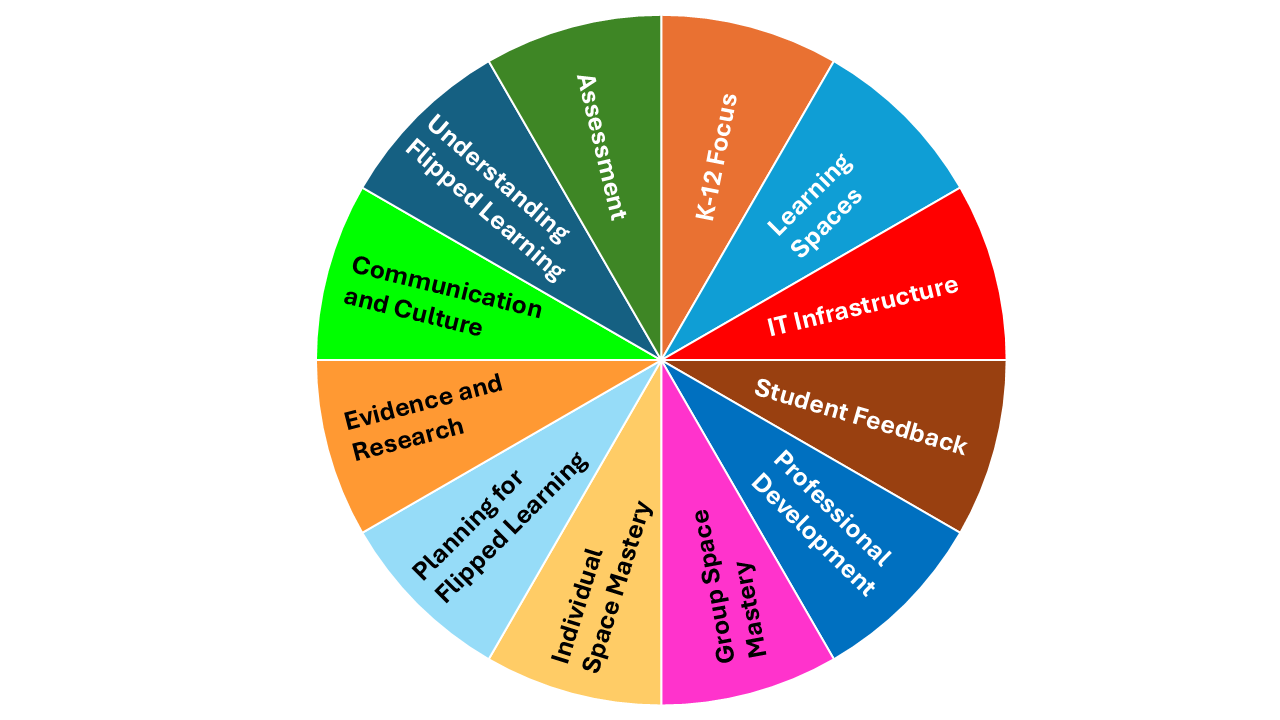
The twelve sectors of the Flipped Learning 3.0 Framework
It also highlights the need for a strong learning culture, clear communication, and meaningful connections between individual and group learning spaces. Another key aspect is the intentional structuring of learning processes, where lower-order cognitive activities take place in the individual space, while higher-order thinking is developed in the group space.
In addition, the framework addresses practical considerations such as flexible learning environments, appropriate use of digital tools, continuous feedback, and evidence-based practice. Professional development is also a core component, ensuring that educators continuously refine their competencies and stay connected to both local and global learning communities.
Flipped Learning 3.0 places a strong focus on adaptability and inclusivity, making it particularly relevant for diverse learning contexts, including adult education. Despite its growing importance, adult education remains a relatively underdeveloped field in this area, especially in German-speaking countries, where both research and practical implementation are still limited.
Furthermore, it is important to distinguish clearly between the Flipped Classroom as a way of organising instruction and Flipped Learning as a comprehensive pedagogical framework. Flipped Learning 3.0 provides the necessary structure and depth to move beyond this confusion and to support a more systematic, learner-centred approach to education.
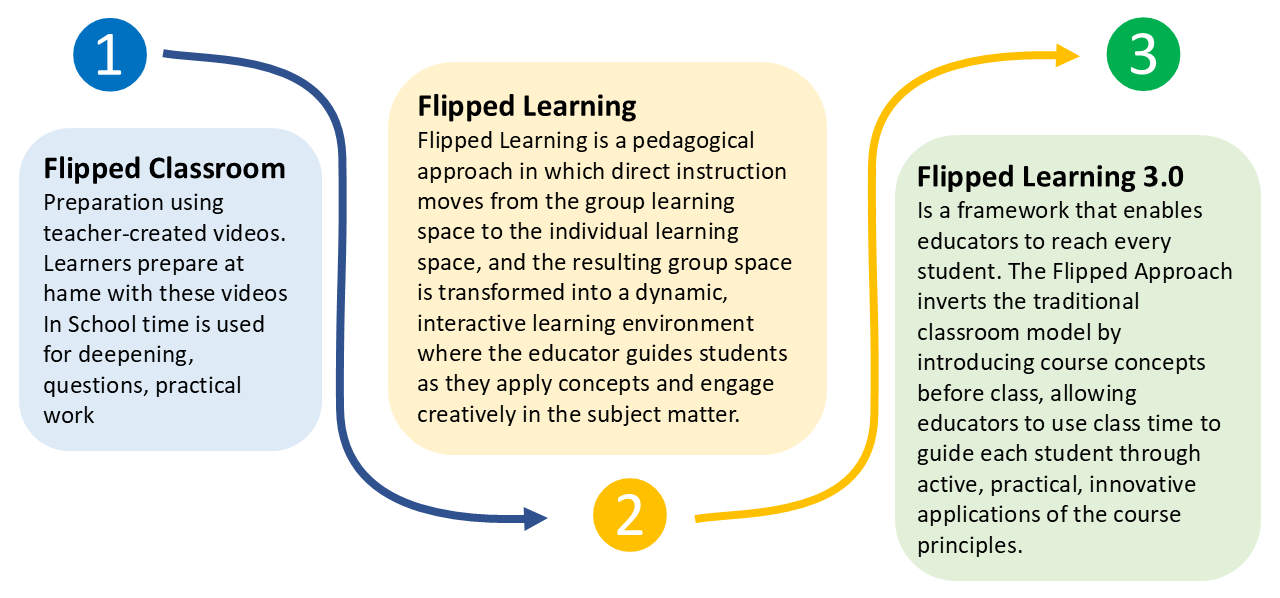
The development Flipped Learning (three stages of flipping)
What is a pedagogical (andragogical) Framework?
A pedagogical (andragogical) framework is a structured set of principles, concepts, and guidelines that supports the design and organisation of teaching and learning processes. It helps educators make informed decisions about how learning should be planned, delivered, and evaluated.
A pedagogical framework generally focuses on how children and young people learn, while an andragogical framework addresses the specific needs of adult learners, such as self-direction, prior experience, and practical relevance. Such a framework does not prescribe a single method, but rather provides a flexible structure that can integrate different teaching approaches, methods, and tools. Its main purpose is to ensure that learning is meaningful, consistent, and aligned with clearly defined learning outcomes.
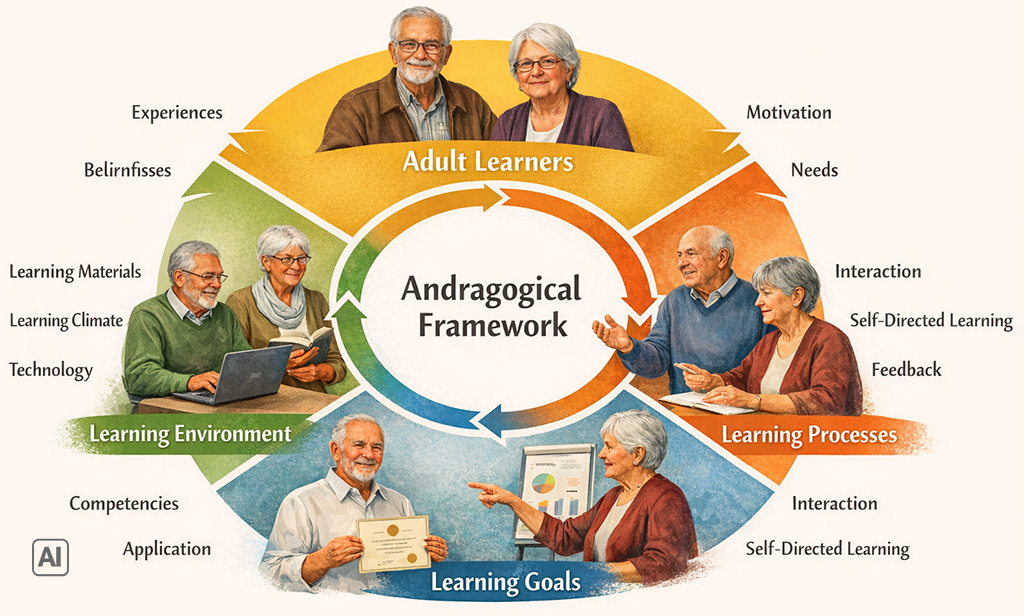
The infographic presents an andragogical framework: At the centre is the concept of the framework itself, surrounded by four main areas: Adult Learners, Learning Environment, Learning Processes, and Learning Goals. Each area includes key aspects such as experiences, needs, motivation, interaction, self-directed learning, competencies, and application.