
1. Assessment as a driver of learning in FL 3.0
Assessment in FL 3.0 supports a shift from teacher‑centred instruction to a learner‑centred culture. Instead of focusing on memorising information, assessment helps adults demonstrate understanding, make connections, and apply knowledge in meaningful ways. It also supports the educator in making informed decisions about pacing, content, and support.
Assessment in FL 3.0 contributes to:
- Flexible learning environments
Adults can show understanding in different ways and at different times. - A strong learning culture
Assessment encourages responsibility, reflection, and active participation. - Intentional content
Assessment helps identify which content should be learned independently and which requires guided support. - Professional educator practice
Assessment provides evidence for adjusting teaching strategies and offering personalised support.
Remember: Assessment in FL 3.0 is a tool for guiding learning, not only for measuring it.
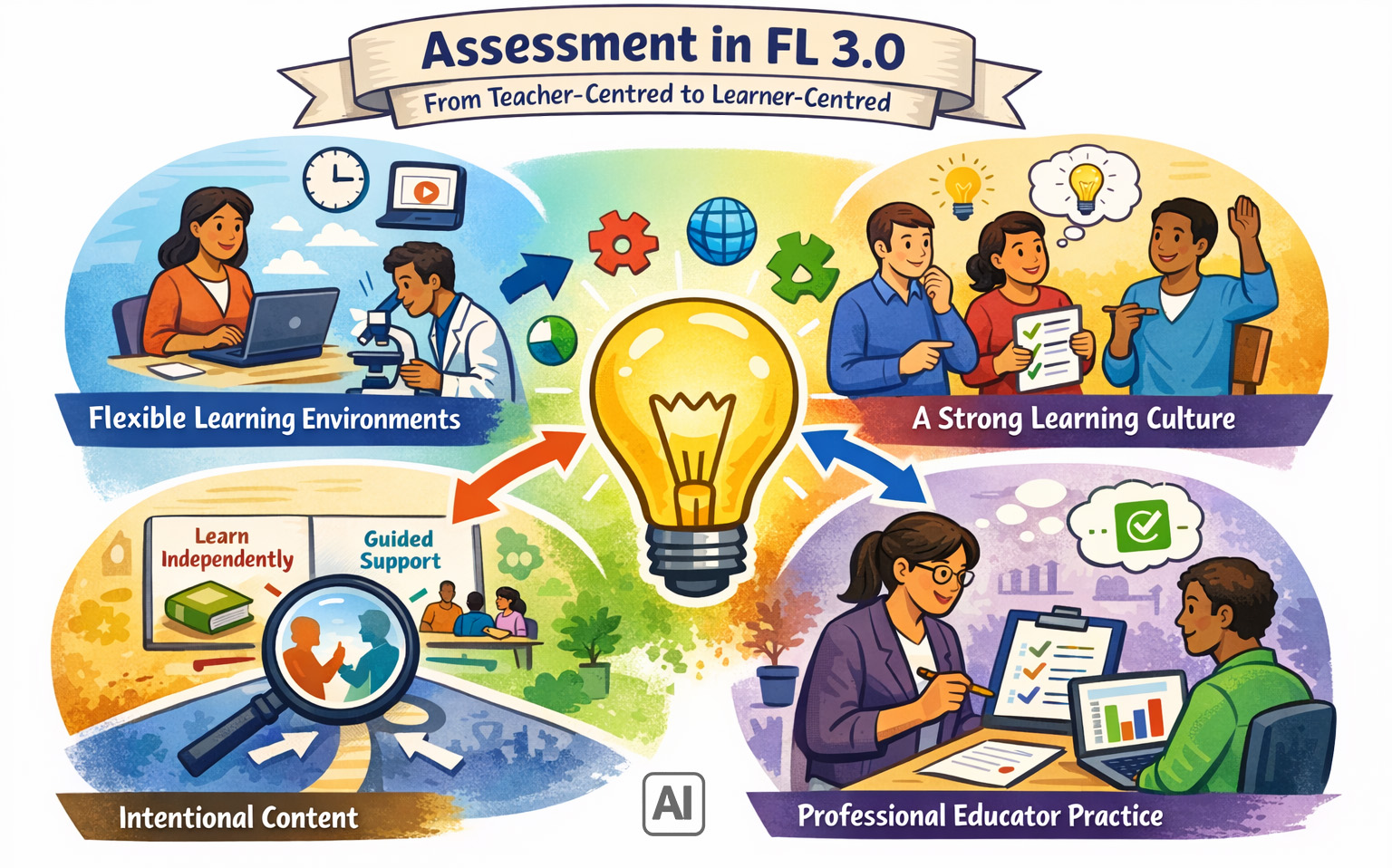
The role of assessment in Flipped Learning. The focus is not on exam but on supporting the learning process.
2. Formative assessment: Supporting learning before and during class
Formative assessment in FL 3.0 includes:
- Pre‑class checks that show whether learners have understood the basic ideas from videos, readings, or interactive tasks.
- In‑class observations that reveal how adults apply knowledge, collaborate, and solve problems.
- Ongoing feedback that helps learners understand what they are doing well and what they need to improve.
Examples of formative assessment in FL 3.0
- Short pre‑class quizzes that check essential understanding and readiness.
- Reflection prompts that help adults connect new ideas to their own experience.
- Small in‑class tasks that show how well learners can apply concepts in real situations.
- Peer discussions that reveal misunderstandings and deepen understanding.
Remember: Formative assessment helps adults take responsibility for their learning and prepares them for deeper in‑class work.
3. Summative assessment: Measuring application and more in-depth understanding
Summative assessment in FL 3.0 includes:
- Practical tasks that reflect real‑world challenges.
- Case studies that require analysis, decision‑making, and justification.
- Projects or portfolios that show progress over time.
- Observation of group work (collaborative learning in the Group Learning Space)
- Observation of group presentations in the group learning space.
- Clear criteria that help adults understand expectations and evaluate their own work.
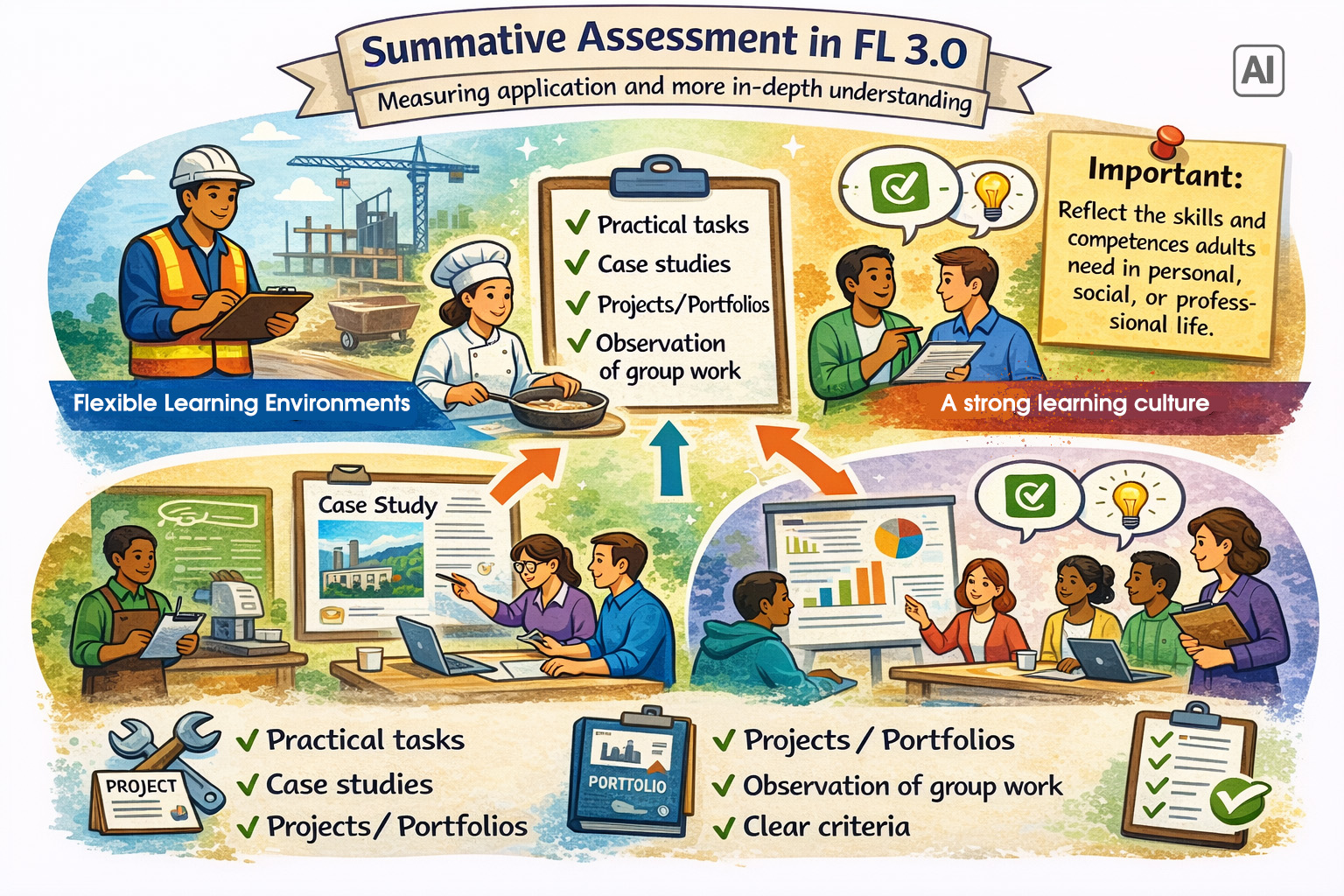
Summative assessments are for final evaluation of the learning process.
4. Alignment with the goals and principles of FL 3.0
To be effective, assessment must be aligned with the goals of FL 3.0. This means that assessment should support active learning, learner agency, and meaningful engagement with content. It should also help educators make informed decisions about how to personalise learning pathways.
Aligned assessment in FL 3.0:
- Focuses on understanding, not memorisation
- Encourages higher‑order thinking such as analysing, evaluating, and creating
- Supports collaboration and communication
- Helps adults reflect on their learning and set personal goals
- Provides evidence for adapting instruction and offering targeted support